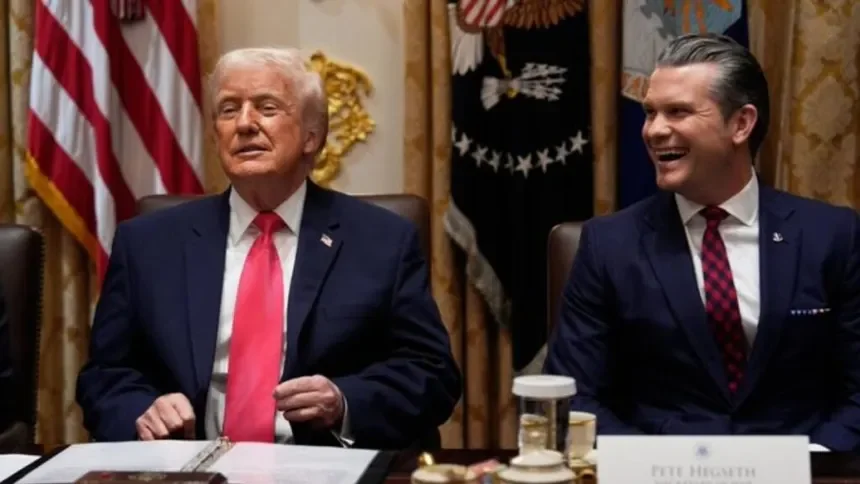
U.S. Defense Secretary Pete Hegseth has sparked controversy after sharply criticizing American media coverage of the Iran conflict, calling parts of the press “unpatriotic” and comparing journalists to biblical figures who opposed Jesus.
The remarks, delivered during a Pentagon briefing, have intensified tensions between the Trump administration and major news organizations.
Sharp Criticism of War Coverage
During the briefing, Hegseth accused sections of the media of focusing disproportionately on negative aspects of the ongoing conflict with Iran while ignoring what he described as military successes.
He characterized coverage as unfair and politically motivated, arguing that reporting failed to reflect the efforts and achievements of U.S. forces.
The defense secretary also used unusually strong language, describing some reporting as “garbage” and claiming it undermined public confidence during a time of war.
Biblical Comparison Raises Concerns
Hegseth’s comments drew particular attention for their religious framing.
He compared journalists to the Pharisees, a group described in the New Testament as opposing Jesus, suggesting that critics of the administration were similarly biased and resistant to acknowledging positive developments.
In making the comparison, he implied that some reporters were acting with predetermined hostility toward the administration rather than evaluating events objectively.
Broader Use of Religious Rhetoric
The remarks are part of a broader pattern of religious language used by officials during the current conflict.
Hegseth has previously incorporated faith-based references into public statements, including leading a Pentagon prayer that drew scrutiny for blending religious and political messaging.
Critics argue that such rhetoric risks politicizing religion and deepening divisions, particularly when used in the context of military operations.
Media and Political Reaction
The comments prompted swift reactions from journalists, media analysts, and political figures.
Critics say the remarks undermine the role of a free press, especially during wartime when independent reporting is seen as critical to public accountability. Others expressed concern about the use of religious comparisons involving historically sensitive groups.
Supporters of the administration, however, argue that the criticism reflects frustration with what they see as consistently negative media coverage.
Ongoing Tensions with the Press
The latest controversy adds to an already strained relationship between the Pentagon and the media.
Recent disputes have included legal battles over press access and reporting restrictions, as well as broader disagreements over how military operations are portrayed.
What Comes Next
The fallout from Hegseth’s remarks is likely to continue as the Iran conflict evolves and political divisions deepen.
The episode highlights a broader debate over media responsibility, government messaging, and the role of journalism during times of national conflict.